When my brother, Robert Fripp and I were little, if our mother was upset or frustrated, she would swear by saying, “Sugar” or “Spit.” 

All the emotion without teaching her two sweet, innocent children ‘naughty’ words.

Recently,  I watched the Michael Smerconish talk show. He discussed the rise of swearing in political ads and even in debates. He commented on the frequency of profanity and who was using it. Many were individuals we would never have expected to swear publicly.

His guest was Benjamin K. Bergen, author of What the F: What Swearing Reveals About Our Language, Our Brains, and Ourselves. His research is fascinating.

Bergen explained that swearing is universal and psychologically powerful. Swearing revolves around cultural taboos such as religion, sex, bodily functions, and identity-based slurs.

In his book, he explores how profanity is processed in the brain, including cases where stroke patients lose much of their language yet retain the ability to curse. This suggests partially separate neural pathways. He even examines the “grammar” of swearing and why certain phrases seem to bend normal language. Cross-culturally, every society has its version of taboo language.

As a student of communication, I find this intellectually intriguing.

As an executive speech coach, I give different advice.

I encourage my clients not to swear.

Yes, men often “get away with it” more easily than women. However, that is not the standard I coach to. My standard is leadership.

When you stand on a stage, sit at the boardroom table, or represent your organization in media or public forums, you demonstrate what you believe is leadership communication.

When you work at or represent this company, this is how you look, act, speak, and behave.

Your language signals culture.

A leader’s words create expectations. They set the emotional tone. They shape reputation.

Can profanity be powerful? Of course. It carries an emotional charge. That is precisely why it works in political ads. It shocks. It signals frustration. It feels “authentic” to some audiences.

However, there is a difference between raw expression and strategic communication.

In business, our goal is not to vent.
Our goal is to persuade, inspire, and build trust.

Consistency, not swearing, builds culture.
Professionalism builds influence.

If your message is strong, you do not need profanity to give it impact.

“Patricia Fripp’s coaching was incredibly valuable. She is razor-focused on every word, every phrase, and every moment that matters. Even as an experienced speaker and an expert on my subject, she helped me transform my ideas into a powerful, cohesive keynote. I learned a tremendous amount from working with her, and the experience elevated both my message and my confidence.” Lisa Fain

Read More...

When I coach executives and high-level conference speakers, one of the most misunderstood tools on stage is the teleprompter.

Many of my clients speak at major conferences, where their speech is fed to a teleprompter positioned high enough that the audience barely notices. That is very different from staring down at a confidence monitor. In that case, you are looking down. Nobody is fooled.

A confidence monitor should show the slide your audience is looking at. Not your script.

A teleprompter is a support system. It is not a substitute for preparation.

If you are delivering the speech, you do not read it. The emcee may read your introduction. However, when you step up to deliver your message, you must be so comfortable with your material that the script simply keeps you on track. You can look away. You can connect. You can think. You are in command.

Read More...

Recently, I had the pleasure of giving a rehearsal coaching session for the National Speakers Association Northern California (NSANC) Last Story Standing contestants.

Six speakers.
Six powerful stories.
Five minutes each.

And every single one of them was well-scripted.

Let me say that again.

Every. Single. One.

The level of thought, structure, and emotional intelligence in those stories was impressive. There were no ideas about stories. They were crafted narratives with tension, transformation, and meaning.

However, and this is where coaching becomes interesting, much of the advice I gave them was similar.

Why?

Because while audiences change and content changes, great presentation principles do not.

Read More...

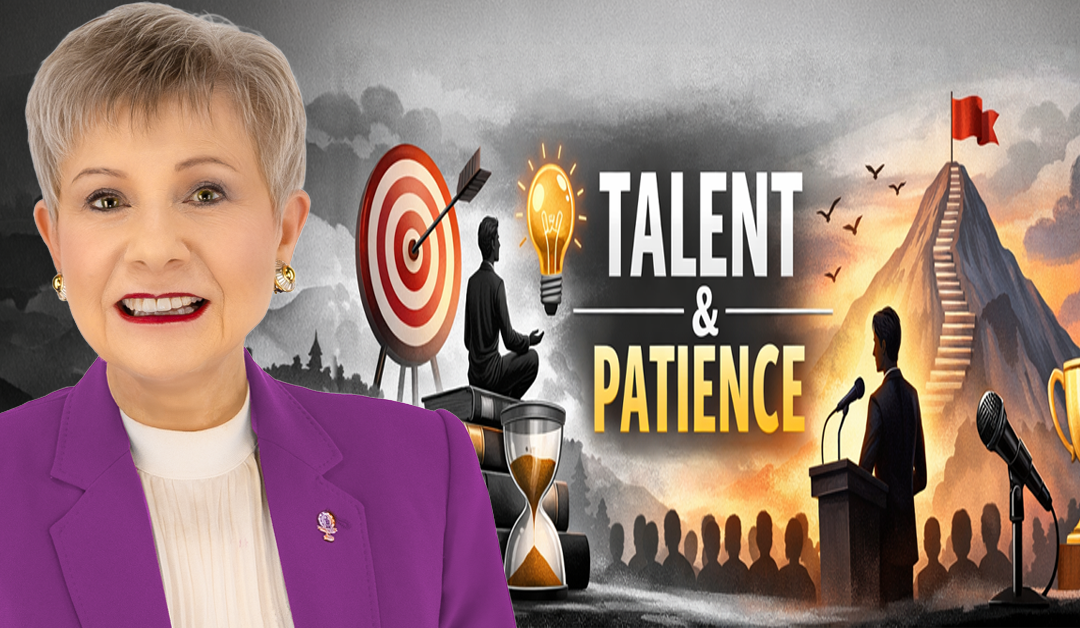
As a seasoned professional speaker, I am frequently asked for advice by up-and-coming speakers. They enjoy my programs on How to Open Your Presentation with Impact and Under the Magnifying Glass: Good to Great Presentations. However, there is one piece of advice they do not always like.

“You may not lack the talent to become a successful speaker. However, you may lack the patience.”

I often quote Budd Friedman, who founded the Improv Comedy Clubs:
“Even with natural talent, it still takes 15 years to become an overnight success.”

This advice applies far beyond professional speaking.

Constantly improve the quality of your presentations.
At the same time, your promotion must be ongoing, consistent, and relentless. You start…and you do not stop.

You revisit, refocus, and rescript how you describe yourself and your services.
You expand and modernize the ways you promote.
You build and nurture strong professional relationships throughout your career.

It pays off.

Recently, I delivered

Read More...

Every so often, I receive an email that makes me smile before I even finish reading it.

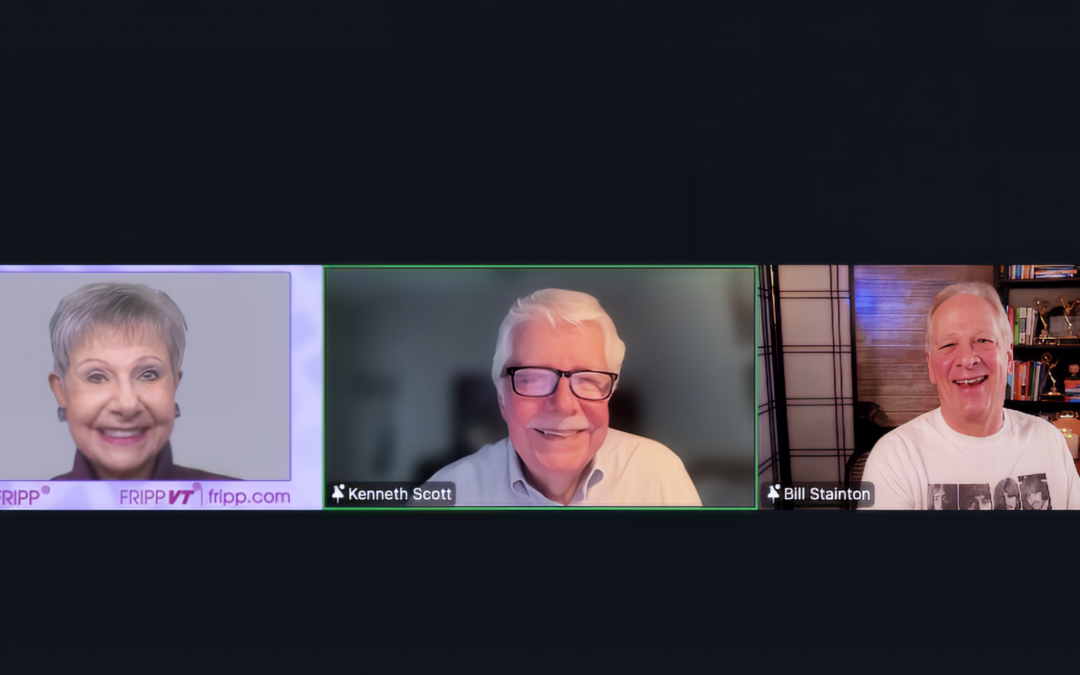
“My good friend Brian Kehew, co-author of the book Recording the Beatles, suggested that, based on the advice you have given your brother, Robert Fripp, you may be able to help me. I am a producer who has worked extensively with the Beatles and David Bowie. Any guidance most gratefully accepted. Thank you.” Ken Scott

Well… that certainly got my attention.

Ken Scott is one of those rare people whose career sounds like a movie script.

Except it’s real. And even more interesting than the celebrity names is what his story teaches the rest of us about opportunity, courage, and creating a career that lasts.

Because yes—his life is extraordinary.

And also, surprisingly relatable.

My Favorite First Question

Whenever I’m talking to anyone, especially someone with an unusual life, I begin with the same question. It immediately takes us past “titles and credits” and straight into the heart of the story.

Read More...

Never underestimate the importance of a moderator.

In virtual events, the moderator is not the filler between speakers. The moderator is the glue that holds the entire experience together.

When virtual events succeed, audiences credit the content. When they fail, audiences quietly blame the flow. That flow lives or dies with the moderator.

After coaching executives, hosts, and moderators for global virtual events across industries, I can say this with confidence: a skilled moderator can elevate average content, while a weak moderator can sabotage brilliant material.

Here is a proven, platform-agnostic framework any virtual event moderator can use to deliver a polished, professional, high-impact experience.

Read More...

I am frequently asked how I work with executives who are exceptional at what they do and have never had the time, opportunity, or need to improve their presentation skills.

Until.

A new position.
Higher visibility.
And a mandatory 45-minute presentation to senior leadership and the board of directors.

Now the stakes are high.
The pressure is real.
And suddenly, being brilliant is not enough.

That is usually when they meet me.

Meet Sandy: Smart, Capable, and Under Pressure

Sandy is a new client. She is not a seasoned speaker and is understandably anxious. Her next presentation to the board matters personally and professionally.

Her boss was direct. She told Sandy she needed the Fripp Edge:

  • Audience-first language
  • Strong structure
  • Persuasive message
  • A close that lingers

In our very first coaching session, we worked directly on her script. Not theory. Not platitudes. Precision.

That is where transformation always begins.

Read More...

January 18 is my personal anniversary. It is the day I arrived in the United States.

When people ask, “Why did you come to America at age 20 with no job, no contacts, and $500?” my honest answer is, “It seemed like a good idea at the time.”

And it did.

At that point in England, expectations for young women were modest, at best. I had met exactly two people who had ever been to the United States. Like many, I knew America through Hollywood movies. Big dreams, bold personalities, and the promise that anything might be possible.

I will not tell you how many decades ago that was. Let’s just say… a few.

Looking back, I smile at the confidence of youth. The certainty that nothing could possibly go wrong. That sense of adventure, mixed with ignorance and optimism, can be a powerful combination.

Whenever I think of that moment in my life, I think of my dear friend Layne Longfellow, PhD. CPAE who passed away in 2019. Layne was my favorite speaker to watch, bar none.

Read More...

Recently, I was interviewed by my NSA colleague Shannon J. Gregg, PhD, for her Life Sciences Sales Lab podcast, and she asked a question that took me straight back to the early 1990s.

“Patricia, when was the first time you coached a scientist?”

That honor goes to my next-door neighbor, Mike Powell. In the mid-1990s, he was a senior scientist at Genentech and deeply involved in research on the AIDS virus. I invited Mike to speak to a group of highly successful women in business, all members of the Continental Breakfast Club.

Before his talk, I suggested, “Most people don’t really know what scientists do. Open by giving us a high-level picture they can relate to.”
Mike didn’t disappoint. He opened by saying:
“𝐁𝐞𝐢𝐧𝐠 𝐚 𝐬𝐜𝐢𝐞𝐧𝐭𝐢𝐬𝐭 𝐢𝐬 𝐥𝐢𝐤𝐞 𝐝𝐨𝐢𝐧𝐠 𝐚 𝐣𝐢𝐠𝐬𝐚𝐰 𝐩𝐮𝐳𝐳𝐥𝐞… 𝐢𝐧 𝐚 𝐬𝐧𝐨𝐰𝐬𝐭𝐨𝐫𝐦… 𝐚𝐭 𝐧𝐢𝐠𝐡𝐭… 𝐰𝐡𝐞𝐧 𝐲𝐨𝐮 𝐝𝐨𝐧’𝐭 𝐡𝐚𝐯𝐞 𝐚𝐥𝐥 𝐭𝐡𝐞 𝐩𝐢𝐞𝐜𝐞𝐬, 𝐚𝐧𝐝 𝐲𝐨𝐮 𝐝𝐨𝐧’𝐭 𝐡𝐚𝐯𝐞 𝐭𝐡𝐞 𝐩𝐢𝐜𝐭𝐮𝐫𝐞 𝐲𝐨𝐮’𝐫𝐞 𝐭𝐫𝐲𝐢𝐧𝐠 𝐭𝐨 𝐜𝐫𝐞𝐚𝐭𝐞.”

You could feel the shift in the room. Everyone leaned forward.

That is the power of a great opening. It creates instant understanding and emotional engagement.
For his close, I encouraged Mike to tie back to that opening and, if possible, elevate it with an inspirational point that reinforced his theme.
He did exactly that.

Read More...

It is never too early to begin thinking about a speech.

Before they meet me, many of my corporate clients believe “preparation” starts the week before the presentation. Some believe it starts the night before. Too many believe it starts when they open PowerPoint.

That is not preparation. That is assembly.

A powerful presentation begins long before you write a single sentence or design a single slide.

It begins with thinking. Observing. Listening.

Read More...