Never underestimate the importance of a moderator.
In virtual events, the moderator is not the filler between speakers. The moderator is the glue that holds the entire experience together.
When virtual events succeed, audiences credit the content. When they fail, audiences quietly blame the flow. That flow lives or dies with the moderator.
After coaching executives, hosts, and moderators for global virtual events across industries, I can say this with confidence: a skilled moderator can elevate average content, while a weak moderator can sabotage brilliant material.
Here is a proven, platform-agnostic framework any virtual event moderator can use to deliver a polished, professional, high-impact experience.
Start With a Promise, Not a Greeting
Your opening is not housekeeping. It is positioning.
“Hello, glad you’re here” wastes the most valuable real estate in a virtual event: the first 30 seconds.
Instead, open with a promise that answers the audience’s unspoken question: Why should I stay?
Examples:
- “Thank you for accepting our invitation. You are in for an action-packed, content-rich experience.”
- “Congratulations on having the vision to be part of this exciting event.”
Then immediately tell them what they will gain. Choose one lead verb and use it once:
- You will learn
- You will hear
- You will discover
List the benefits succinctly. Clarity builds confidence.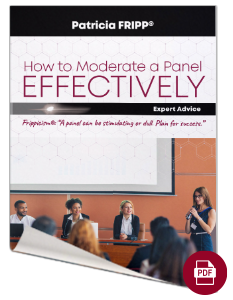
How to Moderate a Panel for Live Presentations
Speak to One Person, Not a Crowd
Even when thousands are watching, effective moderators speak as if they are addressing one individual.
Use you, not “we” or “everyone.”
When viewers think, they’re talking to me, engagement rises. When they feel like an anonymous crowd, attention drifts.
This is not a performance trick. It is audience psychology.
Eliminate Vague Language
Virtual audiences have no patience for filler.
Remove:
- “Things”
- “Kind of”
- “Sort of”
- “We’re going to show you”
Replace with precision:
- Name what it is.
- Say what it does.
- Explain why it matters.
Moderators set the communication standard for the entire event. If you are crisp, others will follow.
Define the Moderator’s Role Out Loud
Early in the program, establish why you are there.
One sentence is enough:
“I’m [Name], and in my role as your moderator, you can feel confident that every presenter will make this event worth your time and attention.”
This signals authority, purpose, and respect for the audience’s schedule.
Manage Time Like a Professional
Nothing builds trust faster than respecting time.
If you can credibly commit to a runtime, say so:
“Stay with us for the next 55 minutes, and not a second longer.”
Audiences stay longer when they know exactly how long “long” is.
Announcements Are Not Content
In virtual events, announcements feel longer than they are.
Deliver essential information quickly, then move on.
If there are incentives for staying until the end, frame them cleanly:
“If you stay with us until the end, you will have the opportunity to receive…”
Pause. Deliver the benefit. Then return immediately to the content.
You can reinforce bonuses later. Do not delay value at the start.
Transitions Are the Moderator’s Superpower
Great moderators do not merely introduce speakers. They connect meaning.
Every transition should do three things:
- Reference what was just said
- Label why it matters
- Point forward
Examples:
- “That insight is troubling, and it explains why the next segment matters.”
- “That outcome is inspiring, which brings us to our next conversation.”
If you can influence speakers, ask them to end with a strong final line. Last words that linger make transitions effortless and powerful.
Minimize Humor and Maximize Energy
Virtual audiences are global. Humor does not translate equally across cultures or languages.
Instead of jokes, use:
- Warmth
- Energy
- Enthusiasm
- A genuine smile
A moderator’s presence should feel engaging, not casual.
This is not a talk show. It is a professional experience with business consequences.
Always Consider: What Do They Need Know, Think, and Do?
What will the result be for them and your company?
After every segment, ask yourself:
- What should the audience know now?
- What should they think differently?
- What should they do next?
Your transitions and summaries should reinforce these outcomes.
Close With Confidence and Direction
The close is not a thank-you. Although you will thank them for a specific, such as “Thank you for your interest in our latest…”. It is a conclusion.
A strong virtual event close includes:
- A brief review of the value delivered
- An assumptive statement
- A clear next step
For example:
“We promised you practical insights and a real-world perspective. I’m confident you agree this exceeded your expectations.”
Then guide them:
“Your next logical step is…”
End with a complete, confident sentence. Never trail off. Your final words should linger.
The Bottom Line
In virtual events, content attracts registration. Moderation determines satisfaction.
A great moderator:
- Creates momentum
- Protects clarity
- Honors time
- Elevates every speaker
That is not a supporting role. It is a leadership position.
If you want your next virtual event remembered for professionalism, engagement, and results, invest in the moderator and train them to lead, not just introduce.
If you want help developing moderators who can command virtual stages with confidence and credibility, that is exactly what I do.
How to Moderate a Panel for Live Presentations
“Thank you for your new scripting and coaching on my delivery. During the taping, I felt excited, relaxed and confident. You’re amazing!” Sam Rubin, SVP, Unit 42, Palo Alto Networks